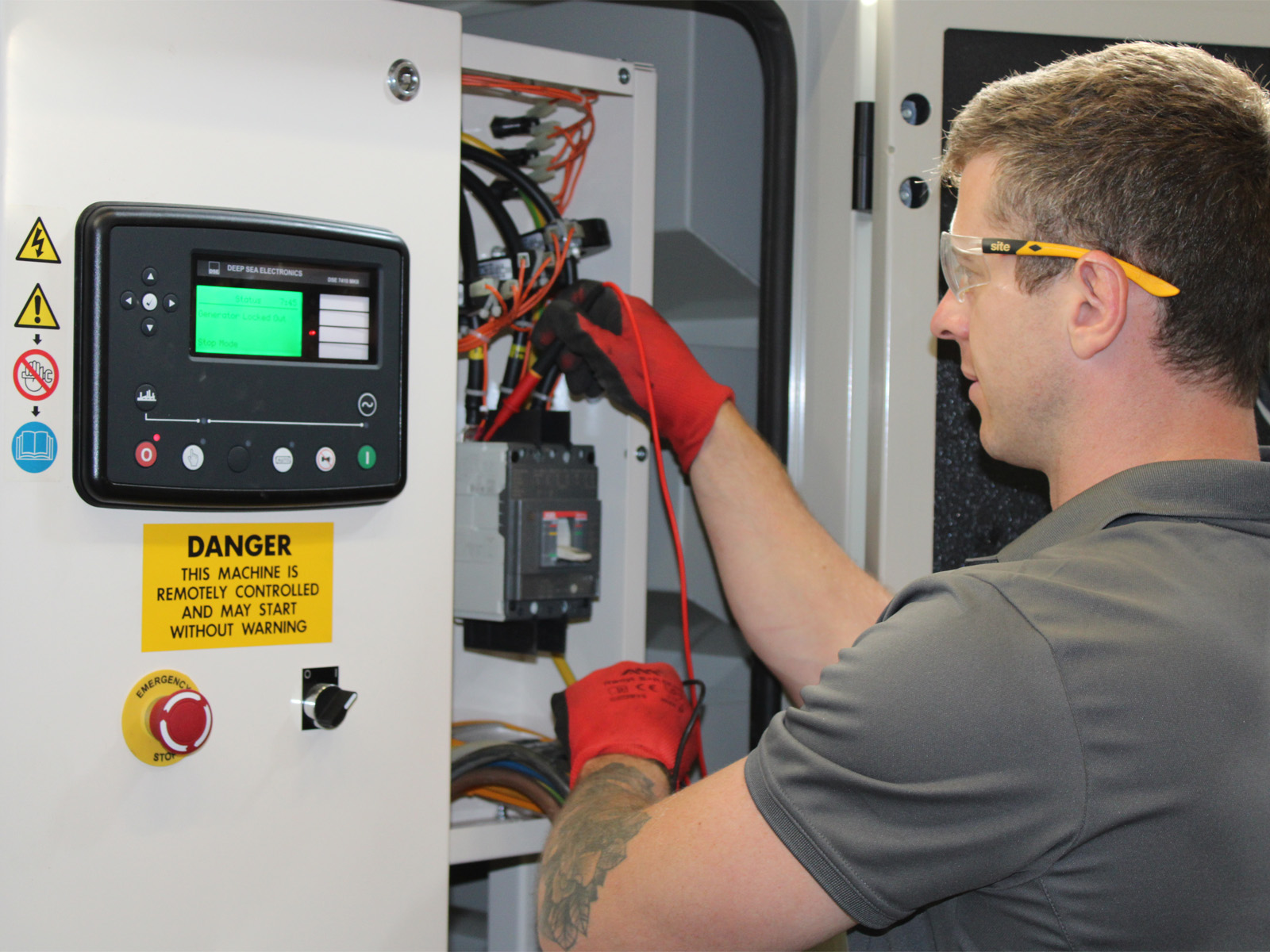
Generator load bank testing is often mentioned in commissioning reports, but not always clearly understood. It is not simply a box ticking exercise. It is a controlled way of proving that a generator will perform properly when it is needed.
During generator commissioning, a load bank test is used to simulate real operating conditions. Instead of waiting for a mains failure to see what happens, engineers connect a load bank to the generator and apply artificial electrical load in stages. This allows the system to be tested safely without affecting the live site.
The load bank testing procedure usually begins with pre checks. Fuel levels, oil pressure, coolant temperature and control settings are reviewed. Connections are inspected. Once the system is confirmed ready, the generator is started and gradually brought up to operating temperature.
Load is then applied in increments. This might be 25%, 50%, 75% and up to full rated load, depending on the specification. At each stage, engineers monitor voltage stability, frequency, exhaust temperature and overall performance. Any irregularities can be identified immediately.
Running at different load levels is important. A generator that only ever runs lightly loaded can develop issues over time. Load bank testing ensures the unit can handle demand properly and burn fuel efficiently under stress.
For new installations, this process forms part of generator commissioning. It confirms that installation, controls and protection systems are working as designed. For existing sites, periodic load testing helps maintain reliability and provides documented evidence of performance.
In simple terms, generator load bank testing removes guesswork. It replaces assumptions with measurable data. For any site relying on backup power, that level of certainty is essential.